

Hawaiian Dresses and Aloha Shirts Manufacturing Process
Have you ever wondered how our authentic Hawaiian shirts and Hawaiian dresses are made?
Manufacturing Hawaiian shirts is a labor of love, and you can feel that love in every piece of aloha attire we produce. But there are a lot of steps involved in going from concept to a completed shirt. Let us show you how it's done!
The process starts with the Hawaiian shirt pattern. The pattern consists of precisely cut cardstock cutouts of the different pieces of the shirt such as the sleeves, collar, pocket and the main body. At a glance, most Hawaiian shirts look pretty much the same. But in reality, each manufacturer has different dimensions and features such as the number of buttons, collar size, sleeve length, overall shirt length, and many other parameters. Even shirts within a style subset, such as all-over print shirts, can have varying patterns. These differences in each men's Hawaiian shirt pattern gives them a unique feel and are why people often prefer one over another.
Another key component to the Hawaiian shirt is the fabric. Graphic artists specializing in Hawaiian shirt designs often start by doing rough sketches on a computer (sometimes even on a sheet of paper) before refining them for presentation to a prospective customer. The skill and experience of the artist are especially important in making sure the beginning and end of a design is not distinguishable as the pattern repeats. This is crucial for border design and engineered Hawaiian shirts.
There are two kinds of prints: confined and open. Confined Hawaiian print shirts are typically owned exclusively by each shirt or dress manufacturer. Open aloha prints are usually owned by the fabric manufacturer or importer and are available for any shirt maker. It is not uncommon for one manufacturer to copy another's designs with just enough difference to be legal. Successful shirt manufacturers often invest hundreds of thousands of dollars in their own confined prints - sometimes much more - and are naturally fiercely protective of their intellectual property.
Once a print is approved, it is printed and delivered on rolls to the manufacturer for cutting. Dozens of layers of different prints are rolled out onto a long cutting table. The different Aloha shirt pattern pieces are laid out on top of a sheet of paper and traced. A technician carefully cuts layers simultaneously with an extremely sharp electric knife. A slight mistake in this step could render the entire batch useless, resulting in a loss worth thousands of dollars. Needless to say, it pays to have a very skilled operator.
Once all the sections are cut into the final Aloha shirt sewing pattern, they are bundled together and sent out to sewing companies. After a few days or weeks, depending on the time of the year and the productivity of the contractor, the nearly completed Hawaiian shirts and dresses are returned to the manufacturer for a few final steps. Some sewing companies will deliver finished and ironed shirts to the manufacturer, while others deliver semi-finished shirts without buttons. A special machine resembling a sewing machine is used to create the holes and apply the buttons to the shirt.
Once these freshly made Hawaiian shirts are complete, they are ready to begin the journey to the customers. Some manufacturers send their shirts to stores in Waikiki or other tourist destinations in Hawaii, while others send them to different department stores both on the islands and the mainland. In our case, the shirts are prepped in our facility and shipped out to our waiting customers around the world through our online store.
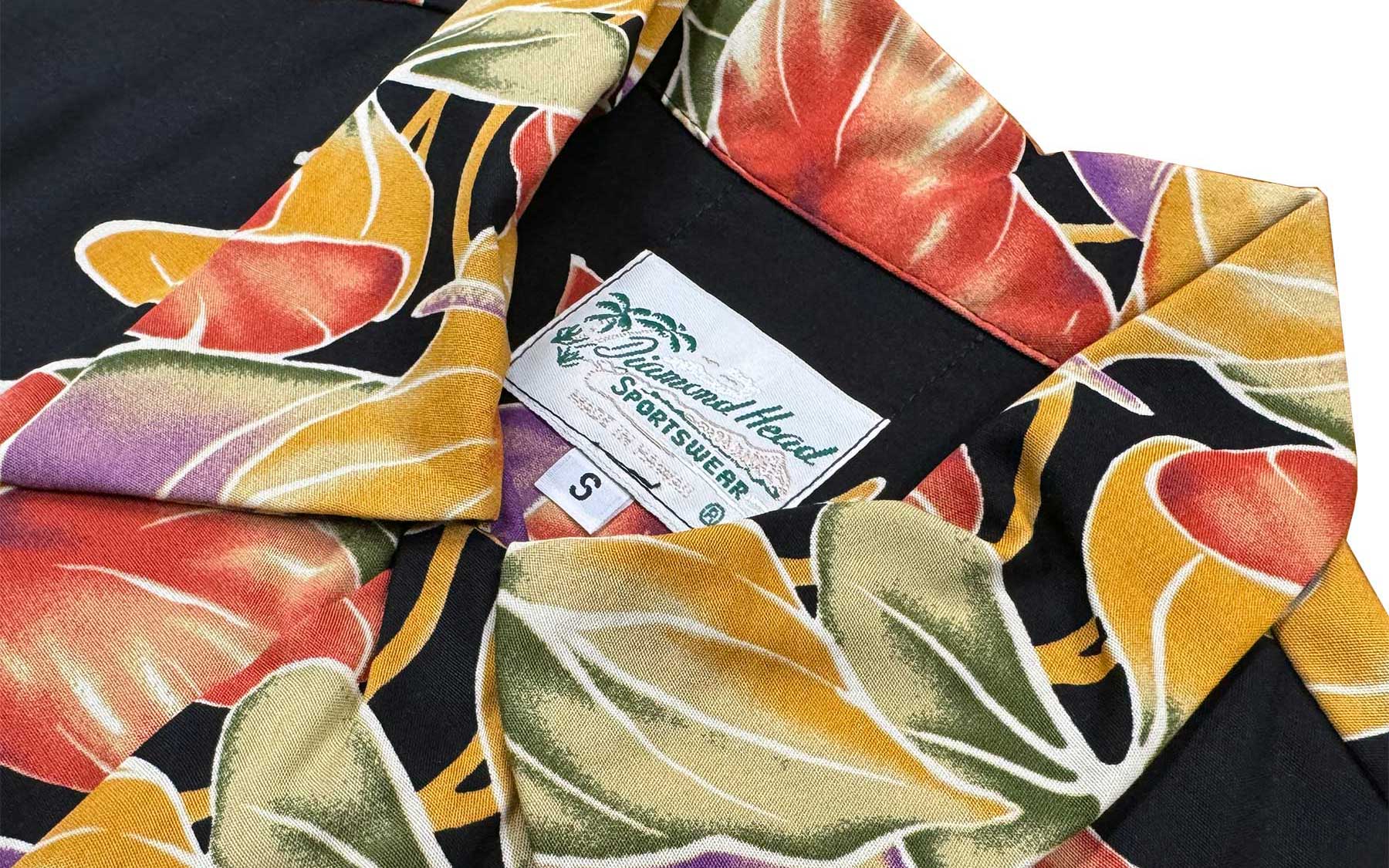
Most of our genuine Hawaiian shirts and dresses are made this way right here in Hawaii. Although the local manufacturers are facing relentless pressure from foreign-made shirts, we believe there is something special about a genuine Hawaiian shirt with the "Made in Hawaii" label. A healthy dose of Aloha goes into each and every shirt we sell and it is this Aloha spirit that we want to share with all of you. So the next time you put on your panel Hawaiian shirt or Hawaiian halter dress from us, you will know the story of exactly how it was made.